Species
Spring Black Bear Hunts in Canada: The Classic Season Opener
The first hunt of the year across the west: hungry bears, prime hides, and long green evenings in the timber.
A spring black bear hunt is the classic season opener across western Canada, and for good reason. Bears come out of the den with the year's first real appetite, they feed hard through the long spring evenings on the first green growth, and they carry the heavy, glossy winter coat that makes a spring hide the one most hunters want. That combination, predictable feeding, daylight movement and prime fur, is why spring bear is the hunt that reopens the calendar after a long off-season. A guided spring bear hunt in Alberta or Saskatchewan runs roughly $2,500 to $5,000 CAD, with the wider market from $2,500 to $8,000. We do not print fixed Alberta spring season dates here, because the province sets the window and it can change year to year, so we confirm the current dates for your unit when you enquire. Our black bear is offered as an allocation and add-on.
Why spring is the classic opener
For a lot of hunters the season truly starts in spring, and bear is the reason. After a winter denned up, a bear's whole world narrows to food. He comes out lean, hungry and focused, and he spends the best light of the day feeding in the open on new grass and the first green flush of the year. That is a huntable animal. He is out in daylight, he returns to the same food, and he is moving with purpose rather than the wary, nocturnal caution he shows once the woods fill in and the pressure builds. Spring also lands before the bugs and the heat of full summer, in the long, cool evenings that make an all-day sit bearable and a glassing hunt a pleasure. It is the reason the spring bear hunt is a fixture across the west and the trip a lot of hunters use to shake off the off-season.
Hides and feeding behavior
The spring hide is the prize. A bear that has just come off the winter is still wearing his full winter coat, thick and long and rubbed by nothing yet, which is why spring bears generally make the best rugs and mounts of the year. As spring runs on and the weather warms, bears start to rub and the coat loses its prime, so the earlier part of the season tends to carry the better hides. That is general knowledge among bear hunters, not a guarantee for any single bear, and any individual animal can vary.
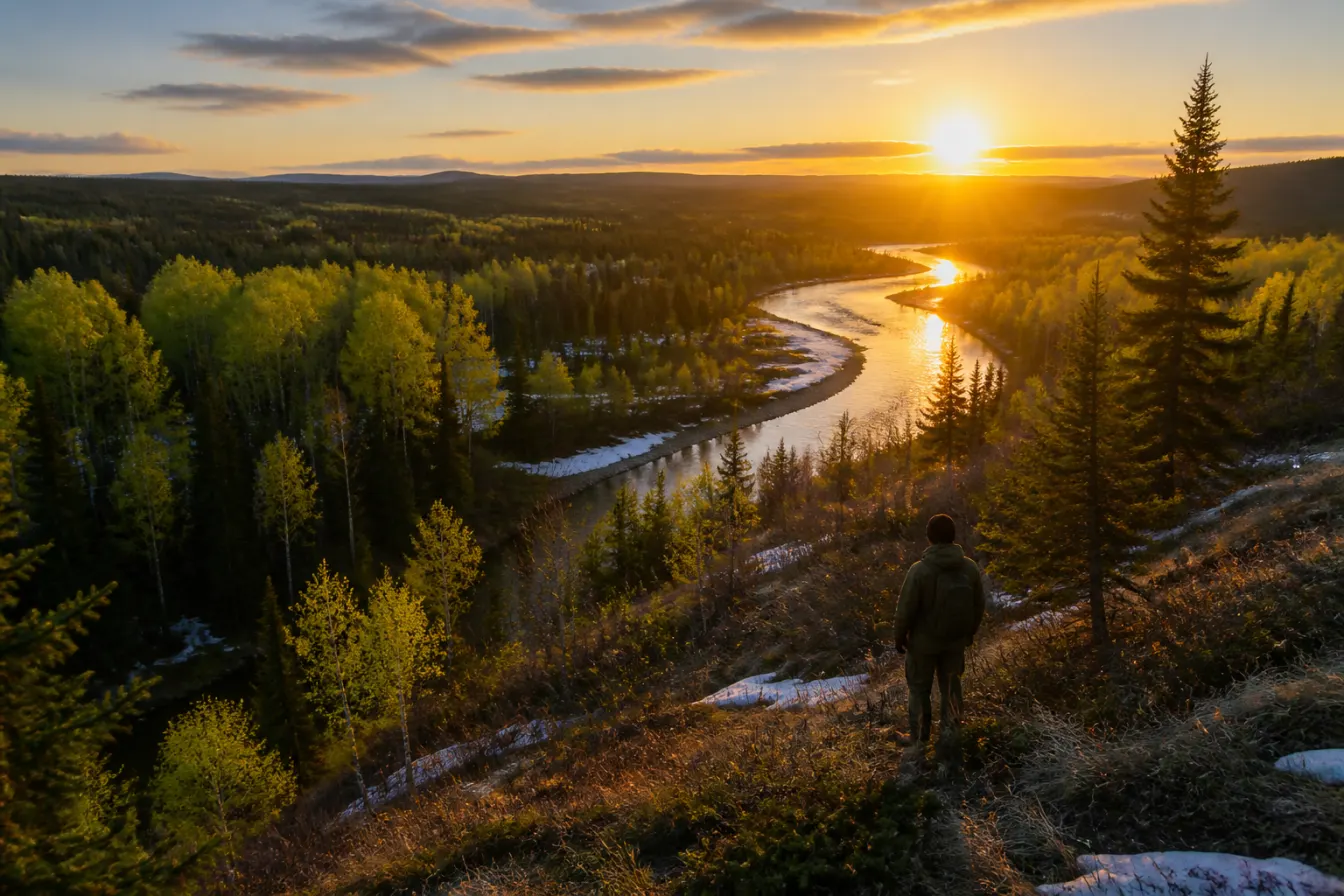
The feeding behavior is what makes the hunt work. Green-up pulls bears onto south-facing slopes, old cutlines, meadows and creek bottoms where the first grass comes, and they graze those openings like livestock in the evenings. That predictability is what a spring hunt is built on, whether you are watching a green slope through a spotting scope or sitting a stand over a food source and waiting for the same bear to walk the same edge he walked yesterday.
What a guided spring day looks like
A spring bear day is shaped around the evening feed, so the rhythm is different from a dawn-heavy big game hunt. Mornings can be slower and are often spent glassing green slopes, checking sign, and getting into position, because the best bear movement in spring comes in the back half of the day. The heart of the hunt is the long evening: you settle into a stand or a glassing spot in the afternoon and you stay put through the golden light and into last shooting light, when the bears come out to feed. Patience is the whole game. You are waiting for a specific bear to commit to a specific opening, and it can happen in the last ten minutes of the day.
Because spring can swing from warm sun to wet snow in a single afternoon in the mountains, you dress and pack for all of it and you plan to sit still for hours. On our country you get to your spot the way we get everywhere, by horseback and on foot, since motorized vehicles are prohibited in our zone. That is part of the appeal: a quiet ride out to a green basin, a long evening watching it, and a ride back to a camp we packed in.
What a guided spring bear hunt costs
Spring bear is one of the most affordable guided hunts on the board, which is part of why it is such a common first guided trip and such a natural add-on to a bigger hunt. Guided spring hunts in Alberta and Saskatchewan commonly run $2,500 to $5,000 CAD, and the wider market spans $2,500 to $8,000 depending on the outfit and the length. Our black bear is offered as an allocation and an add-on rather than a fixed standalone price, so the terms depend on how you build the trip. Licences are separate and set by the province.
| Line item | Amount | Notes |
|---|---|---|
| Guided AB/SK spring bear | $2,500 to $5,000 CAD | Market range, checked July 2026 |
| Guided bear (wider market) | $2,500 to $8,000 | Varies by outfit and length |
| AB non-resident black bear licence | $150 CAD | Provincial fee, GST extra |
| SK guided black bear licence | $240 CAD | Provincial fee |
| CITES export permit | Required to export | Black bear is CITES Appendix II |
Getting your spring bear home
The spring hide you came for is exactly the thing the paperwork protects. Black bear is a CITES Appendix II species, so exporting the bear or its hide out of Canada requires a Canadian CITES export permit, and US hunters also declare their trophy to US Fish and Wildlife on Form 3-177 at the border. We handle the animal prep and airline-ready packaging and walk you through the export steps, so a prime spring rug actually makes it home in good order. The full detail is in our meat and trophy export guide.
Common questions
Q. Why is spring the best time for a black bear hunt?
Bears come out of the den hungry and feed hard in daylight on the first green growth, which makes them predictable and huntable, and they still wear the heavy winter coat that makes the best hides. Add the long, cool spring evenings before the bugs and heat, and spring is the classic opener across western Canada.
Q. Are spring bear hides better than fall?
Generally yes, earlier in spring. A bear just off the winter carries a full, unrubbed winter coat, which is why spring bears usually make the best rugs and mounts. As spring warms, bears start to rub and the coat loses its prime, so earlier tends to be better. Any individual bear can vary.
Q. What does a guided spring bear day look like?
It is built around the evening feed. Mornings are often slower, spent glassing green slopes and checking sign, while the heart of the hunt is a long afternoon-into-evening sit at a stand or glassing spot, waiting for a bear to come out to feed in the last good light. Patience is the whole game.
Q. How much does a spring black bear hunt cost in Canada?
Guided spring bear hunts in Alberta and Saskatchewan run about $2,500 to $5,000 CAD, with the wider market from $2,500 to $8,000. Licences are extra (Alberta non-resident black bear is about $150 CAD). Our black bear is offered as an allocation and add-on, so ask us for the terms of your trip.
Q. When exactly is the Alberta spring bear season?
The season window is set by the province and can change year to year, so we do not print a fixed date we cannot stand behind. When you enquire we confirm the current spring dates and the unit for the exact hunt you want.
Q. Do I need a permit to take a spring bear home?
Yes. Black bear is CITES Appendix II, so exporting the bear or its hide from Canada requires a Canadian CITES export permit, and US hunters file Form 3-177 with US Fish and Wildlife at the border. We package the hide airline-ready and walk you through the documents.
Keep reading
Planning one? See our guided black bear hunts in Canada, and what a black bear hunt costs this season.
Plan your hunt
Ask us about spring black bear dates and terms
Tell us what you are after. We reply within 1 to 2 business days with honest numbers, real dates and the outfitters we would send our own family to. It costs you nothing.