Species
Moose Hunting in the Yukon: The Non-Resident's Guide
The largest moose on the continent, the registered-outfitter law, and an honest comparison with our Alberta mountain hunt.
A Yukon moose hunt is a hunt for the biggest-bodied moose on earth, and by law a non-resident hunts it with a registered Yukon outfitter, one guide to one hunter, on the government's own rules. The Alaska-Yukon moose is the largest subspecies there is, and the territory's remote fly-in country is where the record bulls live, which is exactly why a guided Yukon hunt is a serious five-figure commitment, commonly two to three times what a southern Canadian moose hunt costs. We should be straight with you from the first line: we hunt Alberta's Rockies ourselves, not the Yukon, so this is a plain guide to the territory rather than a hunt we sell. Below is what a Yukon moose hunt actually involves, what the law requires, and how our Alberta Rocky Mountain moose hunt compares if the far north turns out to be more trip than you want to take on.
The biggest-bodied moose on earth
The Yukon is home to the largest moose that walks. The Alaska Department of Fish and Game recognises eight subspecies of moose and calls the Alaska-Yukon race, Alces alces gigas, the largest of all of them. A big bull can reach about 1,600 pounds and stand close to six feet at the shoulder, with antlers that spread wider than a tall man is high. This is the animal on the covers of the record books, and the western Yukon and Alaska are where it grows to full size.
That is the real draw of a Yukon hunt, and it is worth being clear about what it means and what it does not. If raw body size and antler mass are the single thing you are chasing, nothing in the southern provinces matches a mature Alaska-Yukon bull. What you trade for it is remoteness, cost and logistics, because these giants live in country you reach by air, not by truck. For most non-resident hunters that trade is the whole decision, so it is the honest place to start.
Why the Yukon bull is so big
The Alaska-Yukon subspecies (Alces alces gigas) is the largest race of moose recognised by the Alaska Department of Fish and Game, with mature bulls reaching around 1,600 pounds. It is a genuinely bigger-bodied animal than a Rocky Mountain moose, which is the trade you weigh against the cost and the fly-in.
The law: you hunt with a registered outfitter
The Yukon does not leave the guide question open. Per the Government of Yukon, a non-resident must hunt big game with a registered outfitter, and the territory holds you to one guide per big game hunter, so this is not a shared-guide arrangement. There is no unpaid resident-host route the way Alberta allows. For an American or other non-Canadian hunter, the registered outfitter is simply how a legal moose tag reaches your hands.
Canadian non-residents have one alternative to the outfitter, a special guide licence, which lets a qualifying resident of another province guide a limited number of hunters. For a visiting non-Canadian that route is not on the table, so plan on booking through a registered Yukon outfitter. One northern detail to build into your trip: non-resident harvest fees in the Yukon are paid before you leave the territory, so they belong on your departure-day checklist, not something you settle from home afterward. Northern regulations shift, so confirm the current rules with Environment Yukon before you commit to any plan.
One outfitter, one guide, one hunter
The Yukon requires non-residents to hunt big game with a registered outfitter and requires one guide per big game hunter, per the Government of Yukon. That puts it in the same accompaniment-required category as Alberta, British Columbia and the Northwest Territories.
What a Yukon moose hunt actually involves
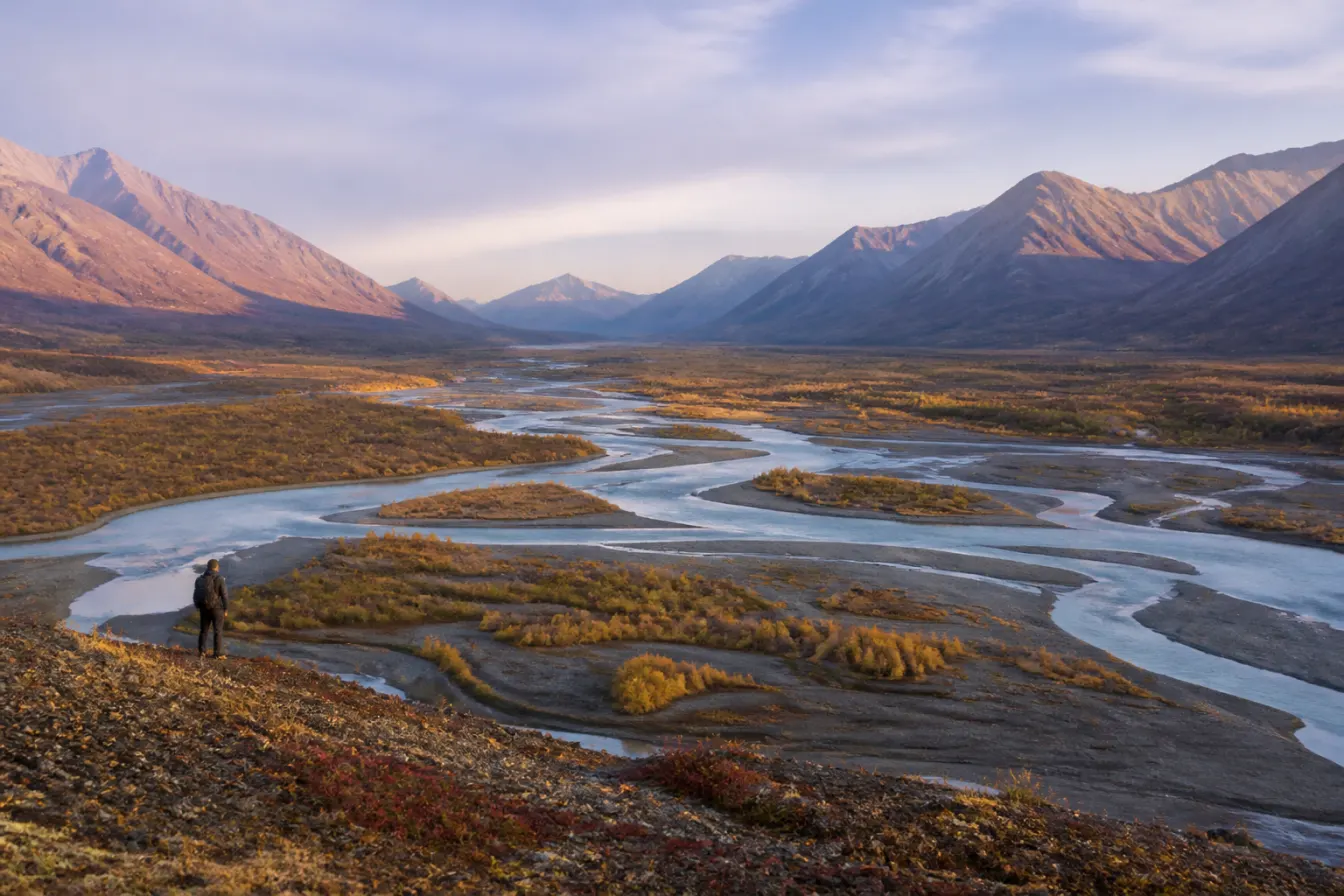
A Yukon moose hunt is a northern wilderness expedition, and it is a bigger undertaking than a foothills camp in the south. Access is typically by air, whether a scheduled flight to a hub like Whitehorse or Watson Lake and then a bush charter or float plane into the outfitter's territory. Once you are in, you are properly out there, hunting from remote spike camps or a base cabin, often days from the nearest road. Hunts tend to run long precisely because getting in and out eats time and weather can pin an aircraft down.
The hunting itself is classic rut hunting. Bulls are called during the early-fall rut, which in the Yukon falls roughly across late August through early October, peaking in the mid to late September rut when a big bull will come to a call and grunt back across a valley. We are deliberately not printing hard opening and closing dates here, because the Yukon's statutory season tables are set by unit and the official pages do not publish them in a way we can source cleanly, so the exact window for your area is a thing to confirm with your outfitter and Environment Yukon rather than trust to a listicle. Expect a real fitness and gear demand: cold, wet, remote country, heavy packs of meat once a bull is down, and self-reliance a long way from help.
What a Yukon moose hunt costs
We do not sell Yukon hunts, so we will not print a Yukon price as if it were ours to quote. What we can tell you honestly is the shape of it. A guided Yukon moose hunt is a serious five-figure commitment, and by current Yukon outfitter rate pages it commonly runs two to three times the price of a Rocky Mountain moose hunt like ours, because you are paying for extreme remoteness, aircraft access and the scarcity of the country. Northern outfitted hunts sit at the higher end of the market for exactly those reasons, so treat any figure as a confirm-with-the-outfitter number rather than a fixed sticker.
The hunt fee is also only part of the total. Budget the surrounding costs the north adds on top: your Yukon licence and tag, the non-resident harvest fee paid before you leave, 5% GST, the flights and charters remote country requires, tips for your guide, and any taxidermy or shipment home. Moose does not carry the CITES export permit that wolf or grizzly do, so the animal itself travels with lighter paperwork, but getting a mount and meat out of the north is still its own line item. If you want the full moose cost stack laid out province by province, our moose hunt cost guide itemises it.
The Yukon is a top-of-market moose hunt
A registered-outfitter Yukon moose hunt commonly runs two to three times what our Alberta mountain moose hunt costs, driven by fly-in access and remoteness. It buys the biggest-bodied moose on the continent. Whether that trade is worth it is the real decision.
How our Alberta moose hunt compares
Here is the honest funnel, because pretending otherwise would waste your time. We run our moose hunt in the Alberta Rockies, in the Blackstone and Wapiabi backcountry northwest of Nordegg, not in the Yukon. It is a different animal in two senses. The Rocky Mountain moose we hunt is not the giant Alaska-Yukon bull, our bulls average fifty inches and over rather than the sixty-inch-plus northern monsters, but it is a full mountain rut hunt for a heavy bull, and it costs a fraction of a fly-in Yukon trip.
The practical differences matter as much as the price. Our country is three and a half hours by road from both the Calgary and Edmonton international airports, so you drive in, with no bush plane and no weather-pinned charter between you and the hunt. It is a ten-day hunt, one guide to one hunter, and we take only four moose hunters a year so the country stays fresh. The rut plays out the same way it does in the north, a bull answering a call and closing the distance in real mountains, at a Rocky Mountain price rather than a northern one. If the Alaska-Yukon giant is genuinely the dream and the budget is there for it, the Yukon is where you do it, and we will say so plainly. If what you actually want is a wilderness rut hunt for a heavy bull without the five-figure northern premium, that is our hunt.
| Yukon moose | Our Alberta moose hunt | |
|---|---|---|
| Animal | Alaska-Yukon giant, the biggest race | Rocky Mountain bull, 50 inches and over |
| Access | Fly-in, remote charters | Drive in, 3.5 hours from Calgary or Edmonton |
| Guide rule | Registered outfitter, one guide per hunter | Licensed outfitter allocation, one on one |
| Cost shape | Top-of-market five figures | $17,500 USD + 5% GST, our published rate |
| Season | Early-fall rut, confirm dates locally | September mountain rut, dates on enquiry |
Which moose hunt is right for you
Whichever way you lean, book early, because the best moose hunts north and south fill one to two years out. If the Rocky Mountain hunt is the one that fits, tell us your target year and we will give you straight numbers and real availability. Start with our Alberta hunts, read the guided moose hunting overview, size it on the moose hunt cost guide, or go straight to plan your hunt.
- Chasing the biggest-bodied moose on earth, with the budget and appetite for a fly-in expedition? The Yukon is the destination, booked through a registered Yukon outfitter.
- Want a real mountain rut hunt for a heavy bull without the northern premium or the bush plane? That is our Alberta hunt.
- Comparing costs? A Yukon hunt commonly runs two to three times an Alberta mountain hunt once you add the charters, so weigh the all-in, not the sticker.
- Either way, confirm current Yukon season windows and species status with Environment Yukon, because northern regulations shift year to year.
Common questions
Q. How big are Yukon moose?
The Yukon holds the Alaska-Yukon subspecies (Alces alces gigas), which the Alaska Department of Fish and Game calls the largest race of moose on earth. A mature bull can reach around 1,600 pounds and stand close to six feet at the shoulder, with antlers spreading well past sixty inches. It is a genuinely bigger-bodied animal than a Rocky Mountain moose.
Q. Do you need a guide to hunt moose in the Yukon?
Yes. The Government of Yukon requires non-residents to hunt big game with a registered outfitter, with one guide per big game hunter. Canadian non-residents have one alternative, a special guide licence, but a visiting non-Canadian books through a registered Yukon outfitter, which is how the tag reaches your hands.
Q. How much does a Yukon moose hunt cost?
We do not sell Yukon hunts, so we do not quote a Yukon price. Honestly, it is a serious five-figure commitment, commonly two to three times the price of a Rocky Mountain moose hunt because of the fly-in access and remoteness. Confirm the current figure with a registered Yukon outfitter, and budget your licence, harvest fee, GST, charters, tips and export on top.
Q. When is the moose season in the Yukon?
Yukon moose are hunted in the early-fall rut, roughly late August through early October, peaking in the mid to late September rut when bulls answer a call. The exact statutory dates are set by unit, and we do not publish hard Yukon dates because the official season tables are not something we can source cleanly. Confirm your window with Environment Yukon and your outfitter.
Q. Do you run moose hunts in the Yukon?
No. We hunt Alberta's Rockies ourselves, not the Yukon. This is a straight guide to the territory so you can plan a Yukon hunt with a registered Yukon outfitter. If you want a mountain rut moose hunt closer to a road and a Rocky Mountain price, that is our Alberta hunt.
Q. Is the Yukon or Alberta better for moose?
It depends on what you want. The Yukon gives you the biggest-bodied moose on the continent, at a top-of-market price and with a fly-in trip to plan. Our Alberta hunt gives you a full mountain rut for a fifty-inch-plus bull, three and a half hours by road from a major airport, at our published rate of $17,500 plus GST. The northern giant costs a large multiple more.
Q. Can I bring my Yukon moose meat and antlers home?
Moose does not carry the CITES export permit that wolf and grizzly do, so the animal itself travels with lighter paperwork than those species. United States hunters declare game and trophies at the border, and shipment out of the remote north is its own cost. Confirm the current process with your outfitter, who handles export from their territory.
Keep reading
Planning one? See our guided moose hunts in Canada, and what a moose hunt costs this season.
Plan your hunt
Ask us about how our Alberta mountain moose hunt compares to a Yukon hunt
Tell us what you are after. We reply within 1 to 2 business days with honest numbers, real dates and the outfitters we would send our own family to. It costs you nothing.