Gear
Elk Hunt Gear List: What We Send Clients Before a 10-Day Rut Hunt
Boots first, paperwork second, everything else by system. What we supply and what you carry.
Before a 10-day horseback elk rut hunt we send every client the same list, and it starts with boots, not rifles. Break in a stiff, waterproof, supportive pair months ahead, because blisters end more hunts than bad shooting does. After that it is layered clothing built for cold mornings and warm middays, quality glass and a rangefinder, a daypack, a good sleep system for a wall-tent camp, and the paper documents you cannot buy at the trailhead. We supply the guiding, the horses, the camp, the meals, the in-field transport and airline-ready packaging of your animal. You bring your personal kit, your rifle and ammunition, and your licences and tags. Here is the whole list by system, plus exactly where the line falls between our gear and yours.
Boots first, and broken in
We put boots at the top on purpose. A horseback and foot hunt in mountain country punishes footwear, and the single most common self-inflicted wound we see is a hunter arriving with a brand-new pair of boots and hopeful optimism. By day three their feet are wrecked and the hunt is about pain management instead of elk. Bring a stiff, supportive, waterproof mountain boot and put real miles on it at home first, ideally with the pack you will carry loaded.
Pair the boots with quality wool socks and a couple of spares, plus a lightweight camp shoe for the wall tent at night. Feet that stay warm, dry and intact are worth more than any other single piece of gear on this list, because everything else assumes you can still walk.
The list, by system
We organise the kit by system so nothing gets forgotten and nothing gets doubled up. Mountain fall weather swings from cold, dark mornings to warm afternoons, so the whole clothing idea is layers you add and shed rather than one heavy coat. Pack for wet as well as cold.
| System | What to bring |
|---|---|
| Feet | Broken-in waterproof mountain boots, wool socks plus spares, gaiters, camp shoe. |
| Clothing layers | Merino or synthetic base layers, an insulating mid layer, a warm puffy, and a waterproof breathable outer shell top and bottom. No cotton. |
| Extremities | Warm hat, sun hat or cap, light and heavy gloves, a neck gaiter or buff. |
| Glass | Binoculars on a harness, a rangefinder, and lens wipes. This is a glassing hunt; do not skimp here. |
| Pack | A daypack that carries meat, with rain cover, plus a small kill kit (knife, sharpener, game bags). |
| Sleep | A sleeping bag rated for cold nights and a pad. Ask us the current rating to pack for before you buy. |
| Rifle kit | Your rifle and ammunition, a sturdy case, a sling, and a bore-clean kit. Sight in before you travel. |
| Personal | Headlamp with spare batteries, water bottles or bladder, personal medications, toiletries, sunscreen, lip balm. |
| Documents | Passport, firearm declaration, WIN card and your licences and tags. See below. |
The paperwork you cannot forget
The gear you can replace in a pinch. The documents you cannot, so treat them as their own system. Every US hunter needs a valid passport, and to bring a rifle you complete a Non-Resident Firearm Declaration in writing at the border and pay a flat fee, which acts as your temporary firearm licence while you are here. The full procedure, including the ammunition and magazine rules, is in bringing firearms into Canada.
You also need your Wildlife Identification Number, the WIN card that identifies you in the provincial system, and your hunting licences and tags. As a non-resident you hunt through our allocation, so the tag side is handled as part of booking rather than bought over a counter on your own. We tell every client exactly which documents to have in hand and what we arrange, and non-resident hunting licences lays out how the licence side works. Carry all of it in a waterproof folder, not loose in a pack.
What we supply, what you bring
The clearest way to pack is to know exactly where our gear ends and yours begins. We run a fully outfitted hunt, so a lot is handled. What you bring is your person, your rifle and your paperwork. Here is the split.
| We supply | You bring |
|---|---|
| Guides, horses and in-field transport | Personal clothing, boots and sleep system |
| Wall-tent and cabin accommodation | Rifle, ammunition and optics |
| All meals in camp | Daypack, headlamp and personal kit |
| Airport transfers and pre and post-hunt lodging | Passport and firearm declaration |
| Field prep and airline-ready packaging of your animal | Licences, tags and WIN card |
Wall-tent camp life
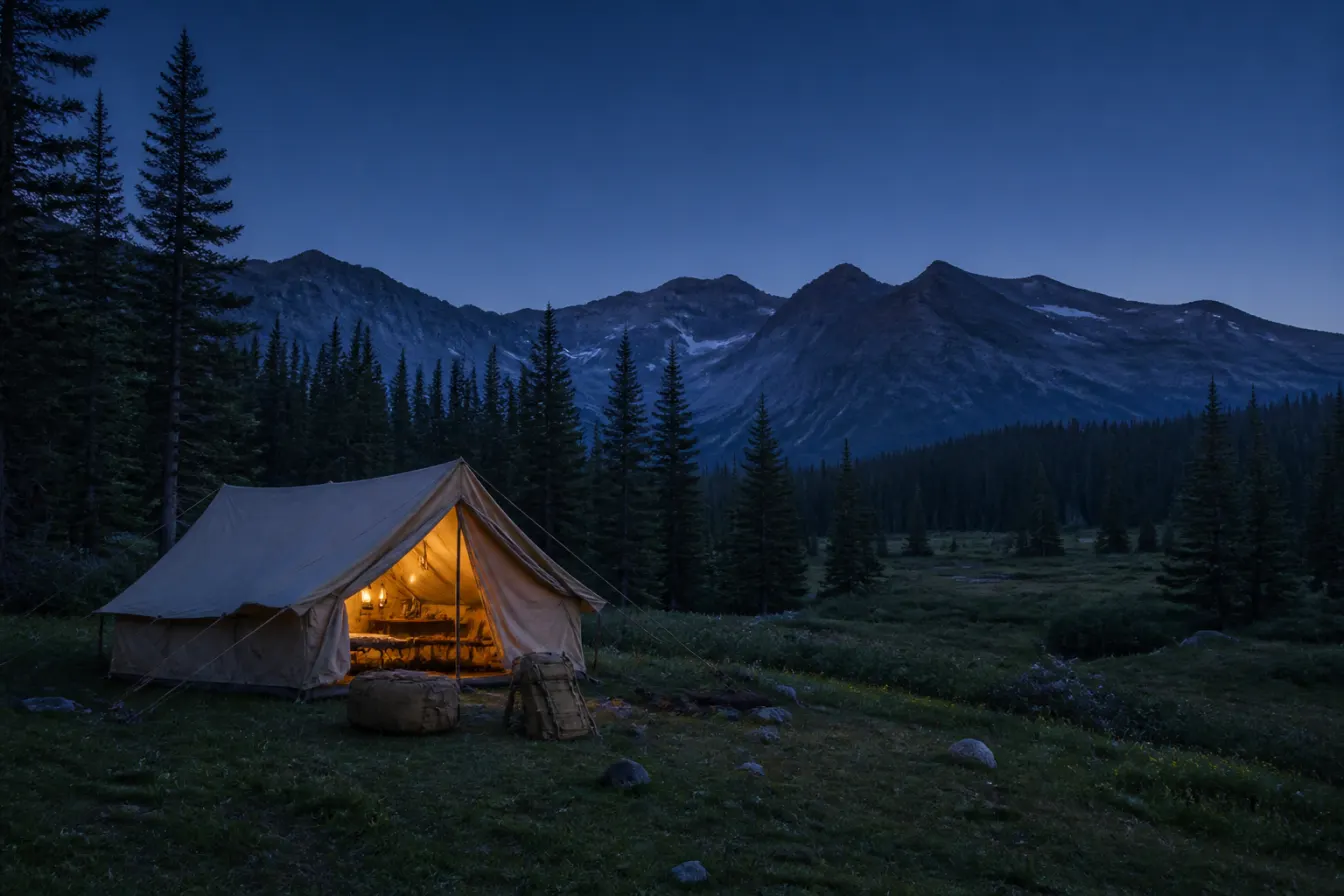
A backcountry elk camp on our ground is wall tents and cabins reached by horse, with a wood stove for heat and a cook keeping everyone fed. It is comfortable in the way a real hunting camp is comfortable: warm, dry and social at night, not a hotel. That shapes your packing. You do not need to carry your own shelter, stove or food, which is why they are on our side of the table, but you do want a warm sleep system, a headlamp, and small comforts for the down hours between hunts.
For a fuller picture of how we live out there, pack trips and wall-tent life walks through the camp, and our Alberta hunts covers the hunt itself. Pack for the country and the camp, tell us if anything on the list is unfamiliar, and we will sort it before you fly rather than at the trailhead.
Common questions
Q. What should I pack for a 10-day elk hunt?
Broken-in waterproof mountain boots, layered clothing for cold mornings and warm middays, quality binoculars and a rangefinder, a meat-hauling daypack, a cold-rated sleep system, your rifle and ammunition, and your documents. We supply the camp, horses, meals and in-field transport.
Q. What boots should I bring for a horseback elk hunt?
A stiff, supportive, waterproof mountain boot, broken in over real miles at home before you travel, ideally with a loaded pack. Blisters end more hunts than bad shooting, so this is the one piece of gear not to leave to chance. Bring wool socks and spares and a camp shoe.
Q. What do you supply versus what do I bring?
We supply guiding, horses, wall-tent and cabin accommodation, all meals, in-field transport, airport transfers, pre and post-hunt lodging, and airline-ready packaging of your animal. You bring your personal clothing and sleep system, your rifle and optics, and your passport, firearm declaration, licences, tags and WIN card.
Q. What documents do I need at the border and in camp?
A valid passport, a completed Non-Resident Firearm Declaration for your rifle (with the flat fee paid at the crossing), your hunting licences and tags, and your WIN card. As a non-resident you hunt through our allocation, so we handle the tag side as part of booking. Carry everything in a waterproof folder.
Q. How cold does an elk rut camp get?
Mountain fall weather swings from cold, dark mornings to warm afternoons and can turn wet, which is why the whole clothing plan is layers you add and shed rather than one heavy coat. Ask us for the current sleeping-bag rating to pack for so you are ready for the nights.
Q. Do I need my own tent and stove?
No. We supply the wall-tent and cabin camp, the wood stove for heat, and all the meals. You bring a warm sleep system, a headlamp and your personal kit. That is the advantage of a fully outfitted backcountry hunt.
Keep reading
Planning one? See our guided elk hunts in Canada, and what a elk hunt costs this season.
Plan your hunt
Ask us about a 10-day Alberta elk rut hunt
Tell us what you are after. We reply within 1 to 2 business days with honest numbers, real dates and the outfitters we would send our own family to. It costs you nothing.